Practical ceramic knowledge
Practical Ceramic Articles
Troubleshooting, materials, firing, production, and equipment guidance for ceramic work.
23 articles available
Showing 23 of 23 unique articles
Defects
Crack Defect in Ceramics: Causes & Analysis
Learn about crack defect in ceramics, its causes like clay content, shrinkage, and slip properties, and how to prevent it.
CeramicNinja
Defects
Pinhole Defects in Ceramics: Causes & Analysis
Learn about pinhole defects in ceramics, causes like trapped air bubbles and mould issues, and how to prevent them.
CeramicNinja
Defects
Warpage Defect in Ceramics: Causes & Analysis
Learn about warpage defect in ceramics, its causes like uneven drying, design complexity and firing issues, and how to prevent it.
CeramicNinja
Defects
Pitting Defect in Ceramics: Causes & Analysis
Learn about pitting defect in ceramics, its causes like gas entrapment and improper firing, and best practices to prevent it.
CeramicNinja
Defects
Bloating Defect in Ceramic Tiles: Causes and Cure
Bloating in ceramic tiles is fired-body swelling caused by trapped gas after early vitrification, often linked to preheat, body permeability and over-firing.
Venkatmani
Defects
Blown Out Defect in Ceramics: Causes & Analysis
Learn about blown out defect in ceramics, its causes like organic contamination in clay body, and how to prevent it.
CeramicNinja
Defects
Logo Defect in Ceramics Manufacturing: Causes & Analysis
Learn about logo defect in ceramics manufacturing, its causes like damaged silk screen and glaze melting, and how to solve it.
CeramicNinja
Defects
Iron Speck Defect in Ceramics: Causes & Analysis
Learn about iron speck defect in ceramics, its causes like iron contamination in raw materials, and how to prevent it effectively.
CeramicNinja
Defects
Stuck Defect in Ceramics Manufacturing: Causes & Analysis
Learn about stuck defect in ceramics manufacturing, its causes like accidental contact and over-firing, and how to prevent it.
CeramicNinja
Defects
Light Glaze Defect in Ceramics: Causes & Analysis
Learn about light glaze defect in ceramics, its causes like insufficient glaze application and over-firing, and how to prevent it.
CeramicNinja
Defects
Heavy Glaze Defect in Ceramics: Causes & Analysis
Learn about heavy glaze defect in ceramics, its causes like over-application and over-firing, and how to fix and prevent it.
CeramicNinja
Defects
Wavy Glaze Defect in Ceramics: Causes & Analysis
Learn about wavy glaze defect in ceramics, its causes like uneven glaze thickness and low air pressure, and how to prevent it.
CeramicNinja
Defects
Poor Repair Defect in Ceramics: Causes & Analysis
Poor repair defect in ceramics refers to visible patches or colour mismatches on the surface of a ceramic product caused by improper repair work during manufacturing.
CeramicNinja
Defects
Matt Glaze Defect in Ceramics: Causes & Analysis
Matt glaze defect in ceramics occurs when the glaze surface appears dull instead of shiny, caused by wrong glaze composition, low firing temperature, or incorrect kiln atmosphere.
CeramicNinja
Defects
Underfired Defect in Ceramics: Causes & Analysis
Underfired defect in ceramics occurs when ceramic products are not exposed to enough heat during firing, resulting in weak, porous products that fail quality standards.
CeramicNinja
Defects
Batt Wash Defect in Ceramics: Causes & Analysis
Batt wash defect in ceramics occurs when alumina particles from kiln furniture fall onto the glazed surface of a ceramic product during firing, causing rough spots.
CeramicNinja
Defects
Clay Bits Defect in Ceramics: Causes & Analysis
Clay bits defect in ceramics refers to small clay fragments that appear on the glazed surface of a ceramic product, caused by poor body cleaning or kiln contamination.
CeramicNinja
Defects
Blast / Explosion Defect in Ceramics: Causes & Analysis
Blast or explosion defect in ceramics happens when a product bursts during kiln firing due to trapped moisture or air pockets. Learn causes and prevention tips.
CeramicNinja
Defects
Peeling Defect in Ceramics: Causes, Analysis & Prevention
Peeling is a defect in ceramic products where the glaze lifts or separates from the body during cooling, caused by a thermal expansion mismatch between glaze and body.
CeramicNinja
Defects
Crazing Defect in Ceramics: Causes, Analysis & Prevention
Crazing is a defect where small cracks appear on the glaze surface of a ceramic product, caused by a thermal expansion mismatch between the glaze and body during cooling.
CeramicNinja
Defects
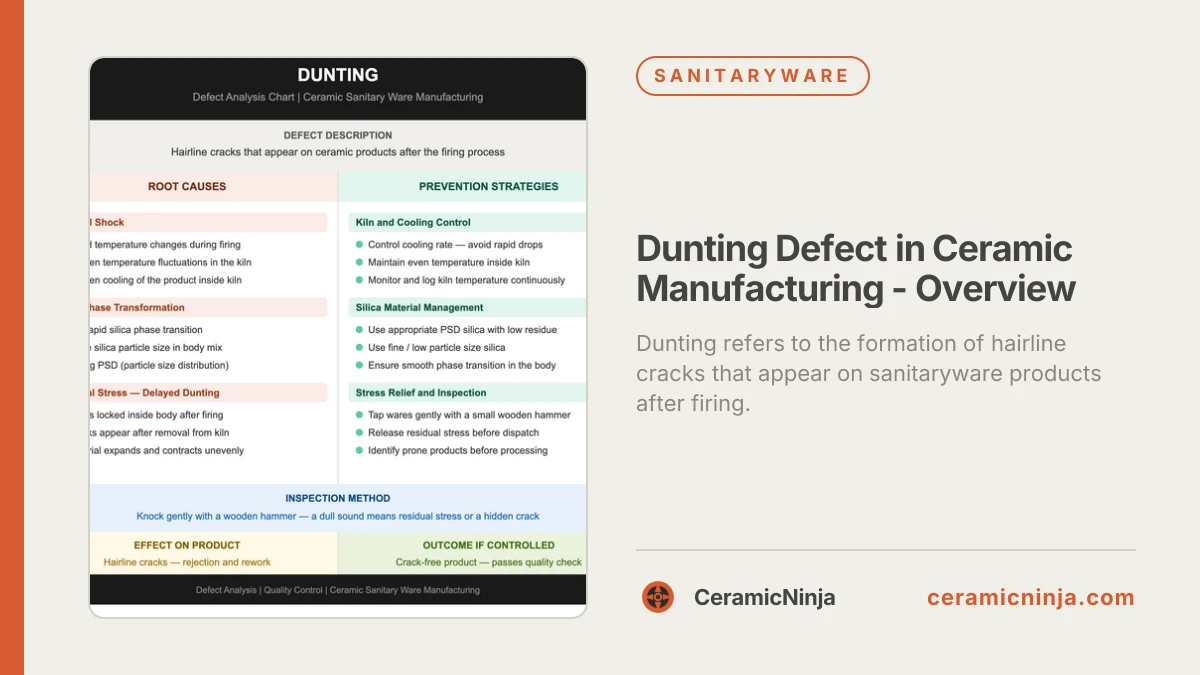
Dunting Defect in Ceramic Manufacturing - Overview
Dunting refers to the formation of hairline cracks that appear on sanitaryware products after firing.
CeramicNinja