Crazing Defect in Ceramics: Causes, Analysis & Prevention
CeramicNinja2 min read64 views
Crazing Defect in Ceramics: Causes, Analysis & Prevention
Crazing is a defect where small cracks appear on the glaze surface of a ceramic product. These cracks can look like a spider web or a fine network on the surface. Crazing affects both the appearance and the use of the product.
How Does Crazing Happen?
Crazing happens during the cooling stage after firing. When the ceramic product cools down, the glaze and the body material cool and contract at different rates. If the glaze shrinks faster than the body underneath it, the glaze gets pulled apart and fine cracks form on the surface.
Root Cause: Thermal Expansion Mismatch
The main reason for crazing is a mismatch in the Coefficient of Thermal Expansion (CTE) between the glaze and the body. The coefficient of thermal expansion tells us how much a material expands or contracts when the temperature changes.
If the glaze has a higher CTE than the body, the glaze will try to shrink more during cooling. But because the body holds it back, the glaze gets stretched and starts to crack. This mismatch is the root cause of crazing in ceramic products.
How to Prevent Crazing
To prevent crazing in ceramics, the following steps should be taken:
- Adjust the glaze formula to reduce its CTE so it matches the body better
- Use raw materials in the glaze that have lower thermal expansion properties
- Test the glaze and body combination before full production to check for CTE compatibility
- Control the cooling rate in the kiln to reduce thermal shock on the product
Impact on Product Quality
Crazing is considered a major defect in ceramic products. It not only makes the product look bad but also creates very small gaps in the glaze surface. These gaps can hold dirt and bacteria, which makes it hard to clean the product properly. Products with crazing are usually rejected in quality inspection.
Share this article
Written by
CeramicNinja
Ceramic industry professional & content contributor.
Leave a Comment
Add your comment
No comments yet. Be the first to share your thoughts!
Earlier read
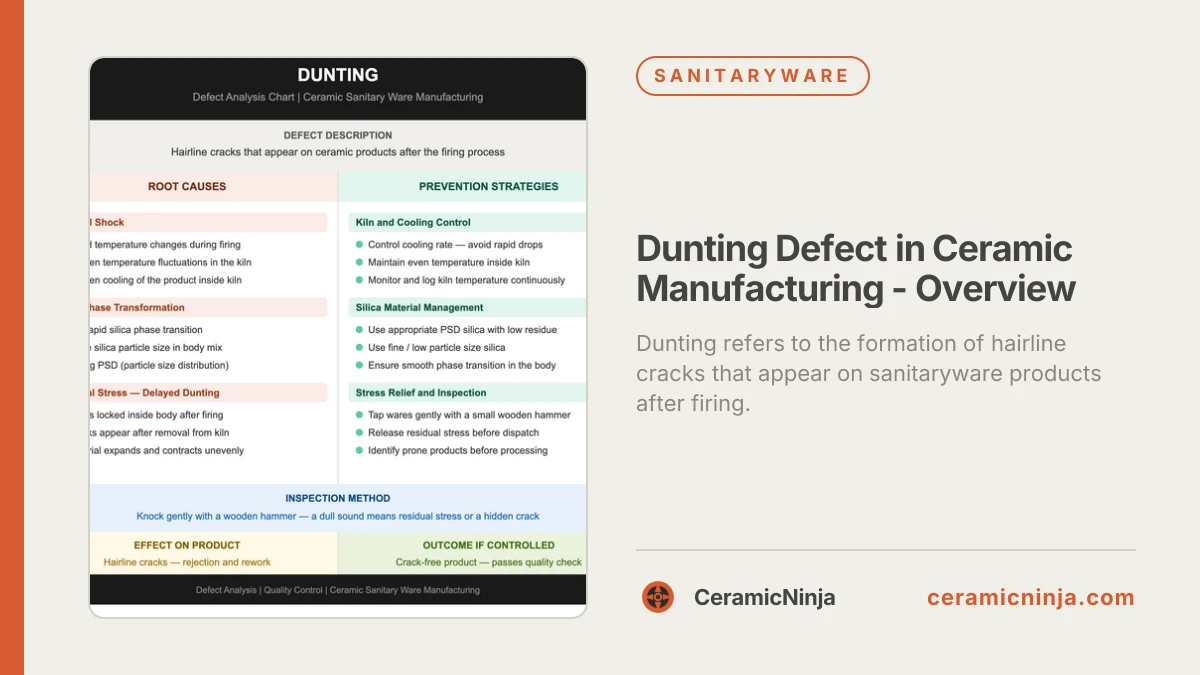
Dunting Defect in Ceramic Manufacturing - Overview
Next read
Peeling Defect in Ceramics: Causes, Analysis & Prevention
Keep exploring
Practical articles, Buy/Sell listings, and jobs