Colour Fading Defect in Ceramics: Causes & Analysis
CeramicNinja2 min read54 views
Colour Fading Defect in Ceramics: Causes & Analysis
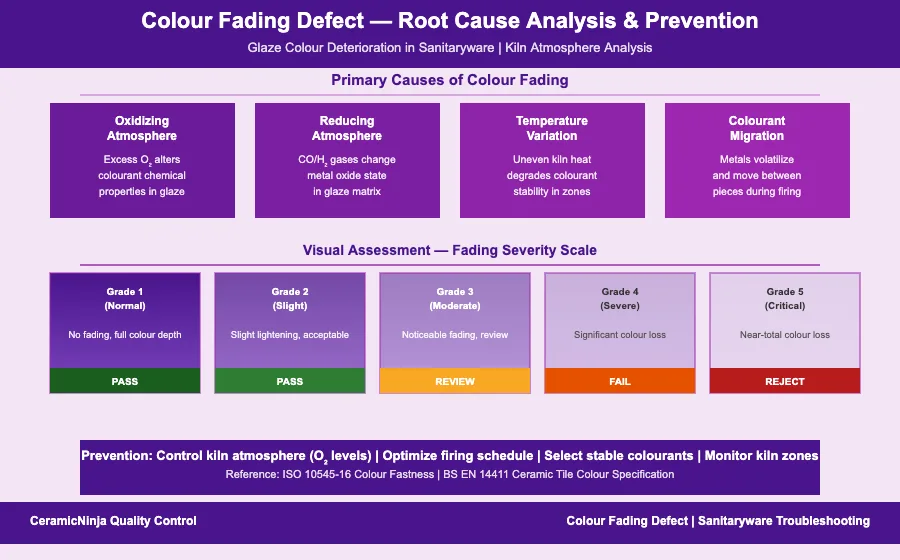
Colour fading is a defect where the glaze colour on a ceramic product changes or becomes dull after firing. This defect is mainly seen in colour-glazed ceramic products. It affects the visual quality and appearance of the finished piece.
What Causes Colour Fading?
The main reason for colour fading is the atmosphere inside the kiln during firing. Two types of kiln atmosphere can cause this problem:
Oxidizing Atmosphere
When there is too much oxygen inside the kiln, it creates an oxidizing atmosphere. This extra oxygen reacts with certain colour materials in the glaze and changes their chemical properties. As a result, the glaze colour fades or shifts to a different shade.
Reducing Atmosphere
When there is too little oxygen in the kiln, it creates a reducing atmosphere. This lack of oxygen also affects the colour materials in the glaze, leading to uneven or faded colour in the final ceramic product.
Other Contributing Factors
Apart from kiln atmosphere, two other factors also affect colour stability:
- Type of glaze — Some glazes are more sensitive to temperature and atmosphere changes than others. The base glaze mix plays a role in how stable the colour remains after firing.
- Type of colourant — Some ceramic colour materials or stains are more likely to fade than others due to their chemical makeup. Unstable colourants are more likely to change colour under different kiln conditions.
How to Prevent Colour Fading
To reduce or prevent colour fading in ceramics, the following steps should be followed:
- Control the kiln atmosphere carefully to keep consistent firing conditions for the specific glaze being used
- Adjust oxygen levels during the firing cycle to avoid both oxidizing and reducing conditions that can affect the glaze colour
- Choose more stable ceramic stains that are less sensitive to atmosphere changes during firing
Share this article
Written by
CeramicNinja
Ceramic industry professional & content contributor.
Leave a Comment
Add your comment
No comments yet. Be the first to share your thoughts!
Earlier read
Chipping and Glaze Knock Defect in Ceramics Manufacturing
Next read
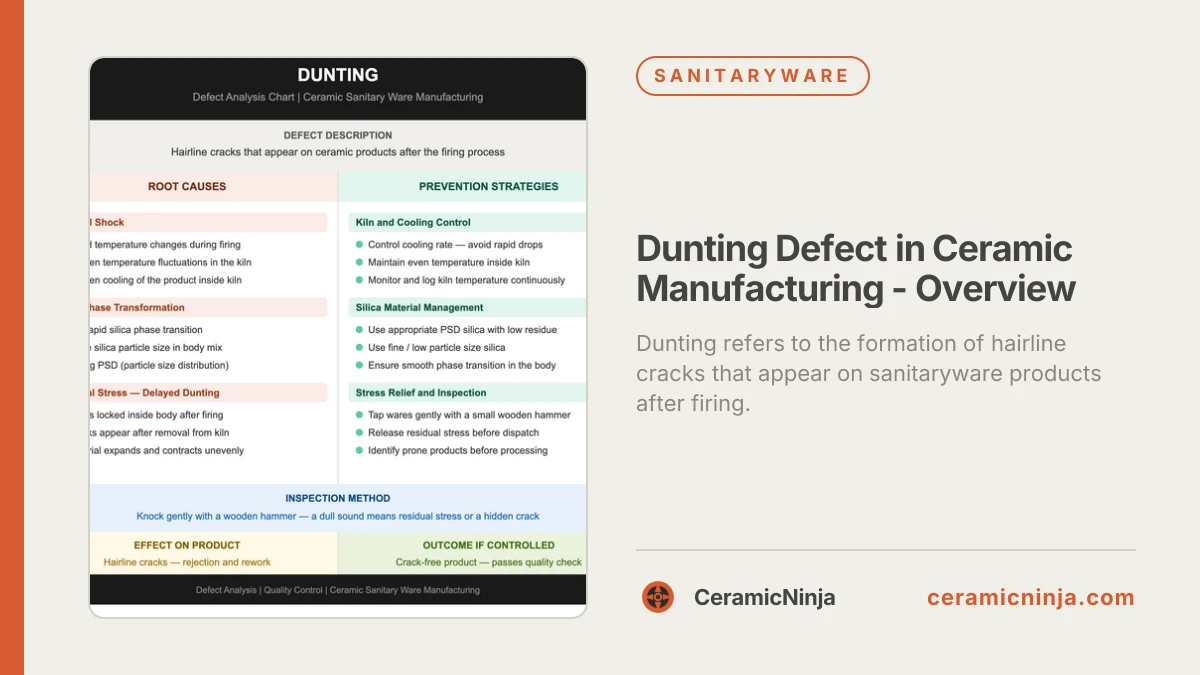
Dunting Defect in Ceramic Manufacturing - Overview
Keep exploring
Practical articles, Buy/Sell listings, and jobs