Chipping and Glaze Knock Defect in Ceramics Manufacturing
CeramicNinja2 min read63 views
Chipping and Glaze Knock Defect in Ceramics Manufacturing
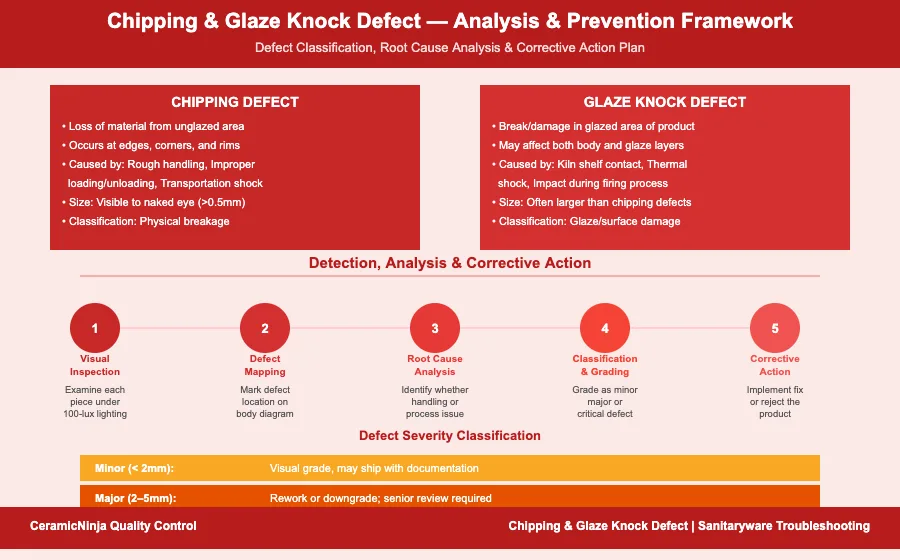
Chipping and glaze knock are two common defects found in ceramic products. Both defects involve physical breakage of the product and usually happen during handling, loading, or transportation.
What is Chipping?
Chipping is the breakage or loss of material from an unglazed area of the ceramic product. It usually happens at the edges or corners of the piece. The damaged area shows the raw body material underneath.
What is Glaze Knock?
Glaze knock is when the breakage happens in a glazed area of the ceramic product. The damage can affect both the body and the glaze together. This type of damage is more visible because it breaks through the shiny glaze surface.
Common Causes
Both defects are mainly caused by rough or careless handling of the ceramic product. The most common situations where these defects happen are:
- Rough handling during loading and unloading
- Ceramic products hitting each other or hard surfaces during transportation
- Products being stacked or stored without proper padding or protection
- Low product thickness in certain areas, making the ceramic piece more likely to break on impact
How to Prevent These Defects
The following steps can help reduce chipping and glaze knock in the ceramics factory and during transport:
- Increase product thickness in areas that are more likely to receive impact, such as edges and corners
- Use smooth surfaces and protective materials during loading and unloading to avoid direct impact on the ceramic product
- Cushion ceramic wares properly during transport to reduce the chance of products touching or hitting each other
- Train factory workers on proper handling practices
Impact on Production
Chipping and glaze knock defects usually result in rejection of the ceramic product. Unlike some surface defects, physical breakage cannot be repaired easily on a glazed or fired piece. Prevention through better handling is the most effective solution.
Share this article
Written by
CeramicNinja
Ceramic industry professional & content contributor.
Leave a Comment
Add your comment
No comments yet. Be the first to share your thoughts!
Earlier read
Rework and Refire Process in Sanitaryware Manufacturing
Next read
Colour Fading Defect in Ceramics: Causes & Analysis
Keep exploring
Practical articles, Buy/Sell listings, and jobs