Splash Test for Sanitaryware Product: Method & Analysis
CeramicNinja2 min read32 views
Splash Test for Sanitaryware Product: Method & Analysis
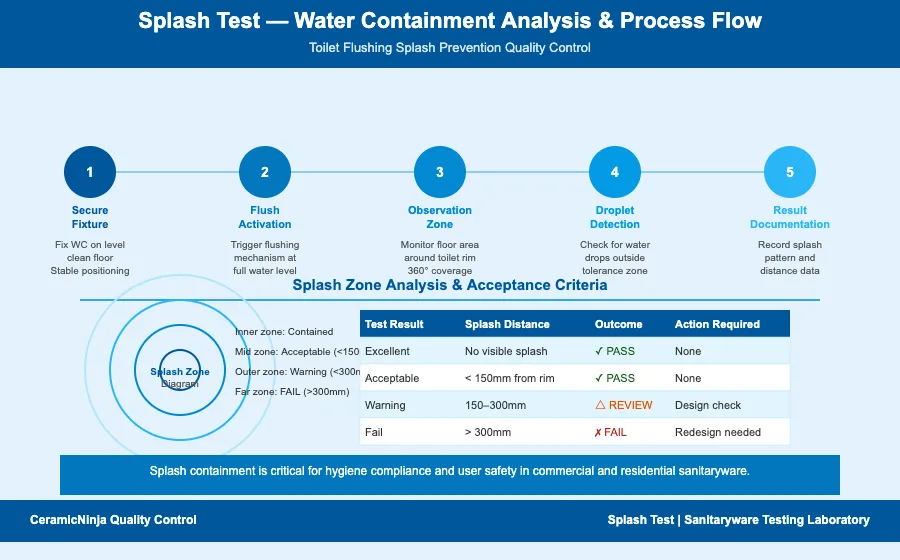
The Splash Test is done to check whether water splashes out of the toilet bowl and onto the surrounding floor during flushing. A good quality toilet should contain the water inside the bowl and allow clean, controlled flushing without making a mess on the floor.
This test is important from both a hygiene and a user experience point of view. Water splashing on the floor during every flush is a quality defect that will cause customer complaints.
Test Procedure
Place the toilet securely on a clean, level floor.
Activate the flushing mechanism as in normal use.
Carefully observe the area around the toilet, especially around the rim, for any water droplets that fall onto the floor during or after the flush.
Count the total number of individual water droplets found on the floor.
Acceptance Criteria
A maximum of 10 individual water droplets on the floor is allowed for the toilet to pass the test. If more than 10 droplets are found on the floor after flushing, the product fails the test and should not be dispatched.
Why This Test Matters
Water splashing on the floor is unhygienic and creates a slipping hazard. It also means the flushing design is not properly directing water flow inside the bowl. Catching this issue at the factory ensures that only well-designed, clean-flushing toilets reach the customer.
Share this article
Written by
CeramicNinja
Ceramic industry professional & content contributor.
Leave a Comment
Add your comment
No comments yet. Be the first to share your thoughts!
Earlier read
Flatness of Upper Surface Test for Sanitaryware Product
Next read
Smudge Test for Sanitaryware Product: Method & Criteria
Keep exploring
Practical articles, Buy/Sell listings, and jobs