Flatness of Upper Surface Test for Sanitaryware Product
CeramicNinja2 min read31 views
Flatness of Upper Surface Test for Sanitaryware Product
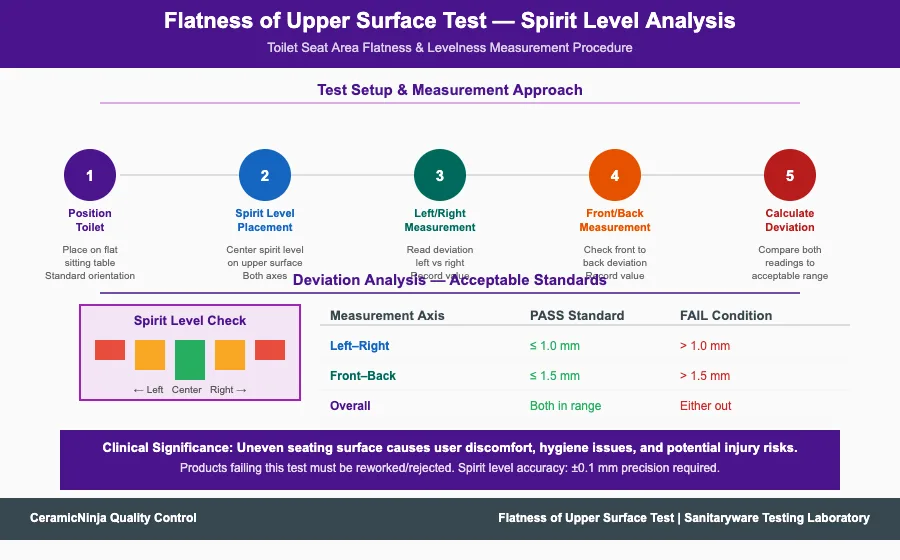
The Flatness of Upper Surface Test checks how level and flat the top seating surface of the toilet is. The upper surface is the area where the user sits, so if it is uneven or warped, it causes discomfort, poor posture, and in some cases can even affect the user's spine over long-term use.
This test is done in the factory to make sure the upper surface meets the brand's quality standard before dispatch.
Test Procedure
Place the toilet on a flat sitting table in its normal upright position.
Place a spirit level on the upper surface of the toilet.
Measure the deviation on both the right side and the left side of the surface.
Record the maximum deviation found on either side.
Acceptance Criteria
The acceptable deviation depends on the brand's quality standard:
Reputed brands maintain a maximum deviation of 1 to 2 mm. This is the recommended standard for quality products.
Some lower-grade brands may pass products with deviations as high as 10 mm, but this leads to poor user comfort and is not recommended.
Any product that exceeds the brand's set limit should be rejected.
Important: No Correction Is Possible
Unlike the lower surface, the upper surface of a toilet is fully glazed. Because of this, it cannot be buffed or ground to correct any deviation. If the upper surface fails the flatness test, the product must be rejected outright. There is no rework option available for this defect.
Why This Test Matters
An uneven seating surface is a direct comfort and quality issue. Customers notice it immediately during use. For reputed brands, maintaining a tight tolerance on upper surface flatness is important to protect brand image and ensure long-term customer satisfaction.
Share this article
Written by
CeramicNinja
Ceramic industry professional & content contributor.
Leave a Comment
Add your comment
No comments yet. Be the first to share your thoughts!
Earlier read
Flatness of Lower Surface Test for Sanitaryware Product
Next read
Splash Test for Sanitaryware Product: Method & Analysis
Keep exploring
Practical articles, Buy/Sell listings, and jobs