Flatness of Lower Surface Test for Sanitaryware Product
CeramicNinja2 min read31 views
Flatness of Lower Surface Test for Sanitaryware Product
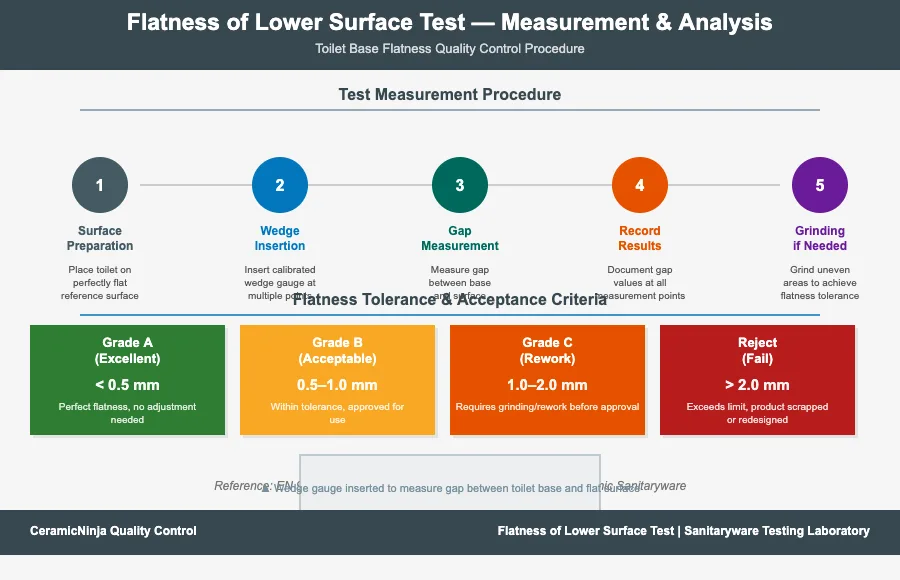
The Flatness of Lower Surface Test checks whether the base of the toilet (the lower surface that sits on the floor) is flat and even. If the base is not flat, the toilet will rock or wobble after installation, which is both a safety issue and a quality defect. This test is done in the factory to catch and correct such problems before the product is dispatched.
Test Procedure
Place the toilet upside down on a flat, level surface.
Check the gap between the flat surface and the toilet base using a wedge gauge.
Measure the gap at all contact points around the base.
Acceptance Criteria and Correction
If the gap measured is up to 3 to 4 mm, the toilet base is buffed or ground down to make it flat and even. This is a normal corrective step done in the factory and the product can still be passed after correction.
If the gap is more than the acceptable limit and cannot be corrected by buffing or grinding, the product is rejected and should not be dispatched.
Why This Test Matters
A toilet with an uneven base will rock or tilt after installation. This not only looks bad but can also cause the pan to crack over time due to uneven load distribution. Catching this at the factory level and correcting it ensures a stable, long-lasting installation for the end user.
Share this article
Written by
CeramicNinja
Ceramic industry professional & content contributor.
Leave a Comment
Add your comment
No comments yet. Be the first to share your thoughts!
Earlier read
Flushing Inspection Test for Sanitaryware Product
Next read
Flatness of Upper Surface Test for Sanitaryware Product
Keep exploring
Practical articles, Buy/Sell listings, and jobs