Single Ball Test for Sanitaryware Product: Method & Analysis
CeramicNinja2 min read37 views
Single Ball Test for Sanitaryware Product: Method & Analysis
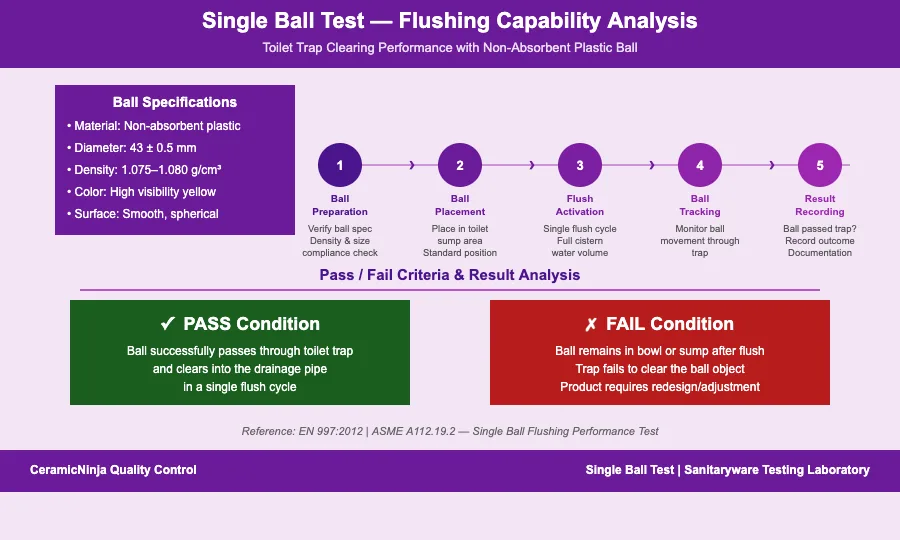
The Single Ball Test checks whether the toilet can flush out a solid object placed in the sump area. This test is used to verify that the toilet's flushing force is strong enough to handle larger solid waste under normal flushing conditions.
Test Ball Specifications
Material: Non-absorbent plastic
Relative density: 1.075 to 1.080 (similar to typical solid waste density)
Diameter: 43 ± 0.5 mm
These specifications are chosen to closely simulate real waste conditions and give a consistent, repeatable test.
Test Procedure
Place the plastic ball carefully in the toilet sump.
Activate the flushing mechanism as in normal use.
Observe whether the ball gets flushed out completely from the toilet.
Acceptance Criteria
The toilet passes the test if the ball is flushed out completely and effectively in a single normal flush. If the ball remains inside the toilet after flushing, the product fails the test. This indicates that the flushing force or the trap design is not adequate to clear solid waste, and the product should not be dispatched.
Why This Test Matters
If a toilet cannot flush out a single ball of this size and density, it will struggle with real solid waste in field use. This leads to blockages, customer complaints, and return calls. Conducting this test in the factory ensures every toilet dispatched has the minimum flushing capability required for reliable daily use.
Share this article
Written by
CeramicNinja
Ceramic industry professional & content contributor.
Leave a Comment
Add your comment
No comments yet. Be the first to share your thoughts!
Earlier read
Saw Dust Flush Test Method for Sanitaryware Product
Next read
Fifty Ball Flush Test for Sanitaryware Product
Keep exploring
Practical articles, Buy/Sell listings, and jobs