Water Seal Test for Sanitaryware Product: Method & Analysis
CeramicNinja2 min read55 views
Water Seal Test for Sanitaryware Product: Method & Analysis
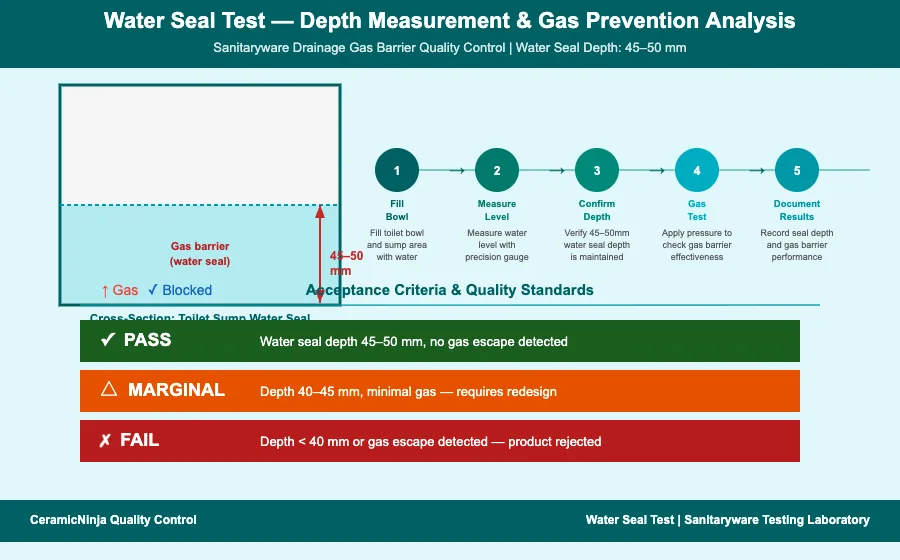
The Water Seal Test is done to check whether the toilet maintains the correct water seal height inside the trap area. The water seal is the standing water that remains in the trap after flushing. This water acts as a barrier that prevents foul gases and odors from the drainage system from entering the bathroom.
If the water seal depth is too low, the barrier is not effective and gases can escape into the room. This is both a hygiene issue and a functional defect.
Standard Water Seal Depth
The standard water seal depth is between 45 mm and 50 mm. This range is widely adopted across the industry to ensure the seal is deep enough to block gases effectively under normal use conditions.
Test Procedure
Fill water into the toilet bowl and sump area until it reaches a stable level.
Measure the water level in the trap area using appropriate measuring tools.
Confirm that the water level meets the standard depth requirement of 45 mm to 50 mm.
Acceptance Criteria
The water seal depth must be within the standard range of 45 mm to 50 mm. If the water level is below this range, the toilet's trap design is not adequate and the product should not be dispatched. A shallow water seal will fail to prevent gas leakage in actual use.
Why This Test Matters
A toilet that looks perfectly fine from the outside can still fail in the field if the water seal depth is insufficient. Foul smell from the drain is one of the top complaints from end users. This test ensures that every toilet dispatched will function as a proper hygiene barrier in the user's bathroom.
Share this article
Written by
CeramicNinja
Ceramic industry professional & content contributor.
Leave a Comment
Add your comment
No comments yet. Be the first to share your thoughts!
Earlier read
Fifty Ball Flush Test for Sanitaryware Product
Next read
Quality Assurance in Sanitaryware Product Manufacturing
Keep exploring
Practical articles, Buy/Sell listings, and jobs