What are Ceramic Formers?
Ceramic Formers Overview
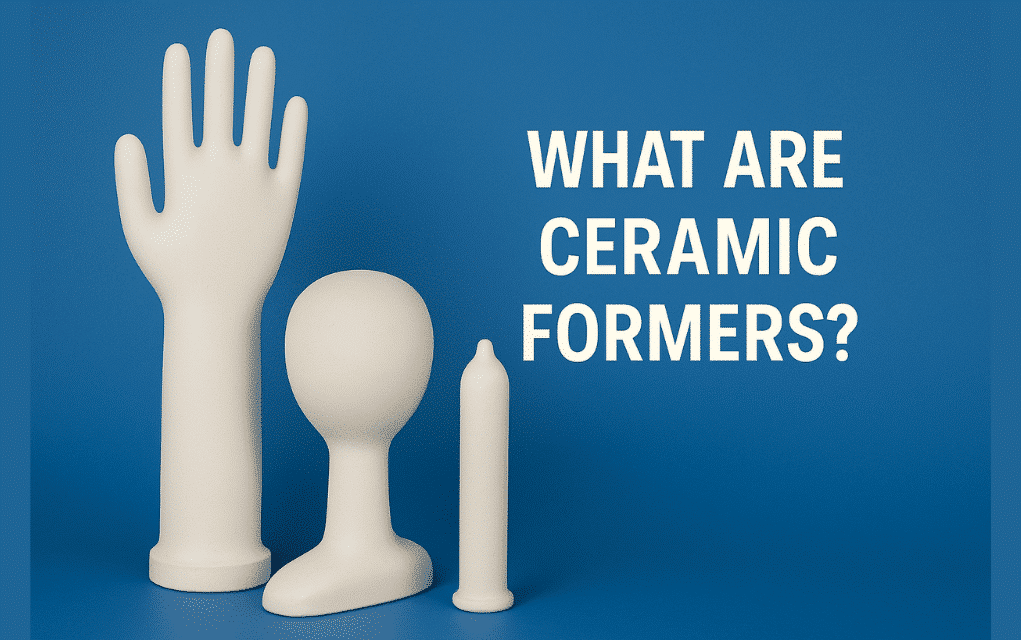
Ceramic formers are ceramic wares that are casted into required shapes and sizes, then fired at temperatures up to 1250°C. This fired ceramic pieces are used as a dipping molds in the production of various rubber products.
In gloves or other product manufacturing process, this ceramic formers is connected to a chain conveyer and moves into the molten latex, nitrile, or rubber at around 140°C. A thin rubber layer forms on the ceramic surface, which is then cooled, blown and stripped off. After every cycle, the formers are cleaned by dipping into chemical bath.
Applications of Ceramic Formers
The most common known ceramic former type is glove formers. Other application types include:
- Shoe formers
- Balloon formers
- Condom formers
Advantages of Ceramic Formers
Ceramic formers are widely used over metal formers due to the following reasons and properties:
- Low water absorption (<0.5%) so longer shelf life
- High thermal shock resistance — this helps formers withstand repeated heating and cooling cycles during production usage
- Chemical resistance — helps in the cleaning cycles without much erosion
- Cost-effective and durable compared to metal formers
Surface Finishes of Ceramic Formers
Depending on product requirements, manufacturers offer different surface finishes:
- Glazed
- Unglazed
- Sandblasted
- Patterned (spray-on finish)
Raw Materials Used
Like traditional ceramics, ceramic formers are made with:
- Clay (Ball clay, china clay)
- Quartz
- Calcined alumina
- Flux (Mostly Nepheline syenite)
Manufacturing Process
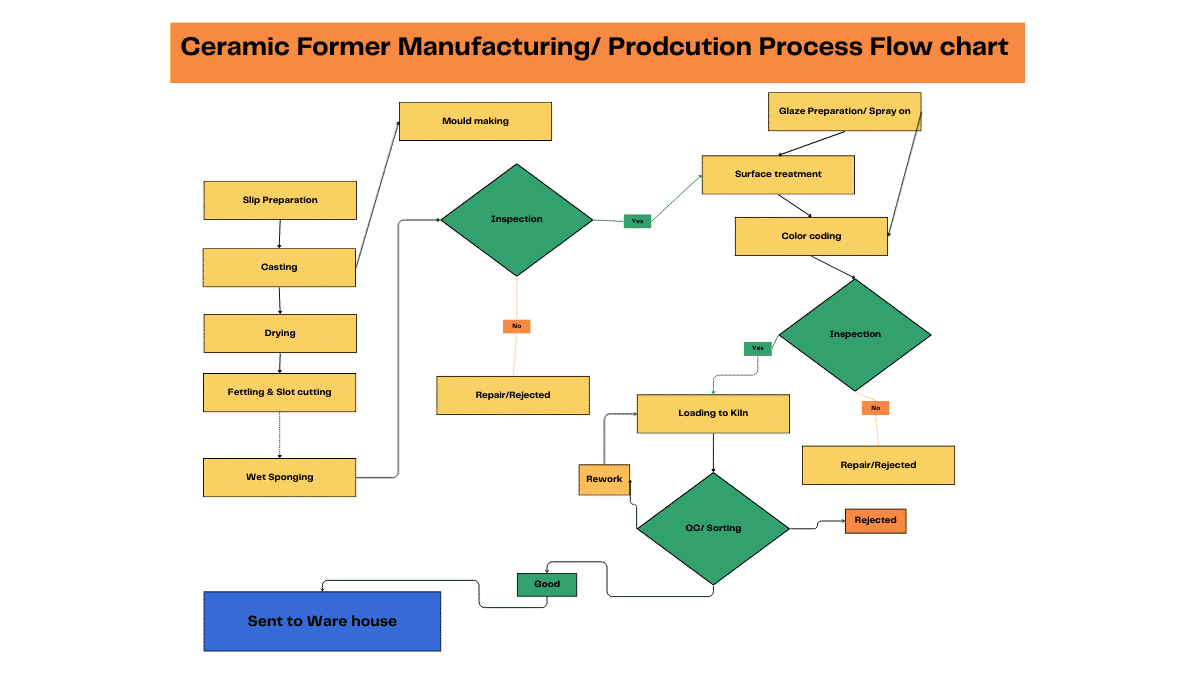
Ceramic formers are produced using traditional bench casting, may be supported by simple conveyor automation for efficiency in large factories. Small factories go for manual methods of production. Due to R&D and process improvement, the quality of ceramic formers has improved significantly in the last 5 years, especially after COVID when the ceramic formers industry boomed and brought substantial investment to the sector. This has made more metal former users switch to ceramic formers.
Global Production
Top-level global producers of ceramic formers are Malaysia, China, and Thailand, with production spreading all around the world.
Share this article
Written by
Venkatmani
Ceramic industry professional & content contributor.
Leave a Comment
Add your comment
No comments yet. Be the first to share your thoughts!
Earlier read
Ceramic Formers Manufacturing/Production Process
Next read
20 Essential Equipment For Sanitaryware Laboratory
Keep exploring
Practical articles, Buy/Sell listings, and jobs