Water Leakage Test for Sanitaryware Product: Method
CeramicNinja2 min read47 views
Water Leakage Test
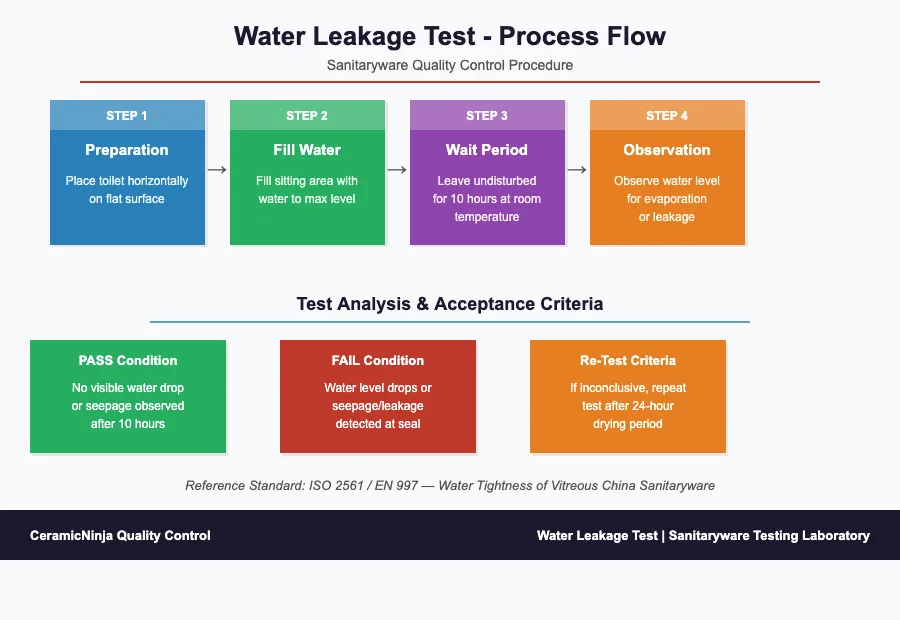
The Water Leakage Test is done to check if the toilet can hold its water seal without any leakage over a long period of time. In a factory, this test is very important to make sure every product leaving the line is fully reliable and meets quality standards.
A toilet's water seal is what keeps bad odors and harmful gases from coming back up through the drain. If the water seal is lost — even by a small amount — the product is considered defective and should not be dispatched.
Test Procedure
Place the toilet in a horizontal position on a flat, stable surface.
Fill water into the sitting area (pan) until it reaches the maximum level of the water seal.
Leave the toilet undisturbed for 10 hours at normal room temperature.
After 10 hours, observe the water level carefully and check for any drop.
Acceptance Criteria
There should be zero drop in the water level after the 10-hour period. Even a small drop in water level means the product has failed the test. This could be due to a crack, a porous body, or a defect in the water seal area. Such products must not be passed for dispatch.
Why This Test Matters
If the water seal is lost in the field, the end user will experience foul smell coming from the drain. This is a major quality complaint and damages the brand's reputation. Catching this issue at the factory level — before the product reaches the customer — is the whole purpose of this test.
Share this article
Written by
CeramicNinja
Ceramic industry professional & content contributor.
Leave a Comment
Add your comment
No comments yet. Be the first to share your thoughts!
Earlier read
Load Bearing Test for Sanitaryware Products
Next read
Toilet Paper Flush Test for Sanitaryware Product
Keep exploring
Practical articles, Buy/Sell listings, and jobs