Manual vs Carousel vs Robot Glazing in Sanitaryware Industry
Venkatmani4 min read9,653 views
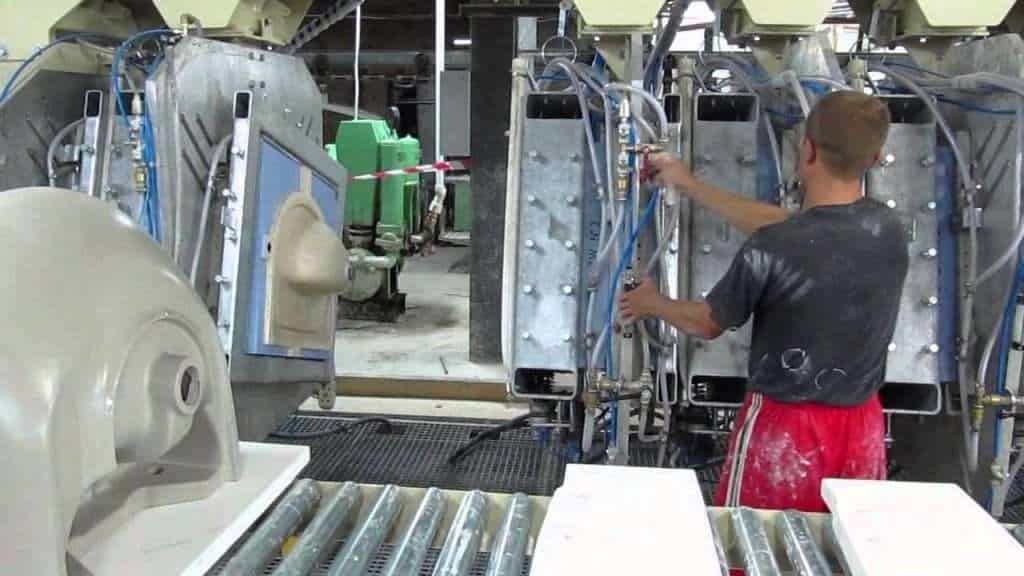
Glazing is an important stage in sanitaryware manufacturing. In this section, dried greenware is inspected first, then glaze is sprayed before firing. This combined area is commonly called control and spray.
Manual, Robot and Carousel Glazing
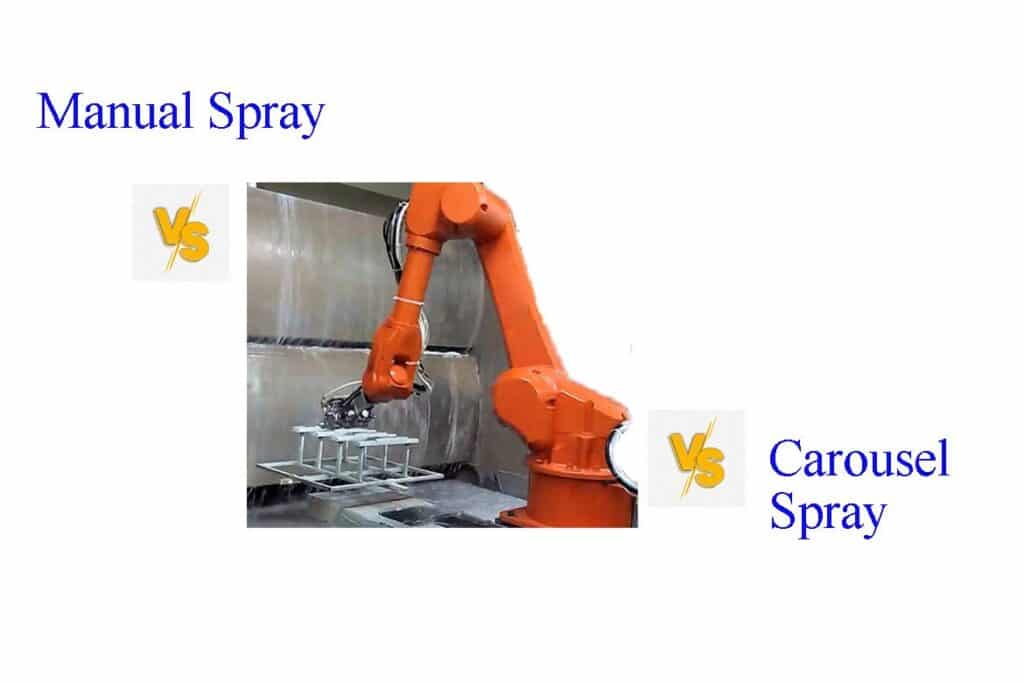
In this article, we will see three common glazing methods used in sanitaryware production. We will compare manual spraying, robot spraying and carousel spraying based on cost, production rate, maintenance, breakdown, quality and manpower.
Manual Spraying
In manual spraying, dried greenware is inspected in one booth and then moved to the spraying booth. The sprayer applies glaze manually. After spraying, the piece is moved for logo stamping and then sent forward for kiln loading.
Robot Spraying
In robot spraying, the inspected piece is loaded on a conveyor, turntable or robot table. The robot sprays the glaze based on the selected program. After spraying, the piece is unloaded and logo stamping is done.
Carousel Spraying
A carousel is a round or square conveyor system with turntables fixed at regular intervals. The piece moves through loading, polishing, inspection, spraying, logo stamping and unloading stations. Each person handles one part of the process.
Installation Cost
Manual booth setup cost is lower than carousel and robot systems. Carousel cost is higher than manual booths, but it is normally lower than a robot system when we compare production capacity. Robot glazing has the highest initial investment because of automation, sensors, electrical parts and programming.
Production Rate
- Manual booth spraying takes around 3 minutes for one WC.
- Carousel spraying can take around 20 seconds for one WC.
- Robot spraying can take around 2 minutes for one WC.
We cannot compare only the time directly because manpower is different in each method. Manual booth uses fewer people. Carousel uses more people. Robot normally uses fewer people, but production depends on program, loading and unloading time. Still, for high production, carousel has a clear advantage.
Maintenance Cost
- Manual booth maintenance is low because the system mainly has a blower and simple booth arrangement.
- Carousel maintenance is moderate because chain, motor and gearbox need attention. Most maintenance can be handled by the factory engineering team.
- Robot maintenance is high because it has electrical, mechanical and programming-related parts. Major problems may need support from the robot supplier.
Breakdown
Manual booths have very low breakdown risk. Even if the blower has a problem, spraying may still continue for some time with control.
Carousel breakdown can happen due to chain, motor or gearbox issues. Normally, maintenance time can be planned, but old carousel chains may need more attention.
Robot breakdown is more difficult because fault finding itself may take time. Small issues like spray gun blockage can be solved quickly, but major robot or zero-point issues can stop production.
Quality of Spraying
- Manual spraying depends fully on sprayer skill. So variation and mistake chances are higher.
- Robot spraying gives repeatability, but issues like gun blockage or zero-point error can create defects.
- Carousel spraying reduces individual mistake because more than one sprayer applies coating in stages.
Manpower and Production Capacity
- Manual spraying normally needs 3 people: inspector, sprayer and logo stamper or unloader.
- Carousel may need around 13 people depending on speed and workstation design.
- Robot spraying normally needs 2 to 3 people: inspector, operator and unloader.
Labour Skill Requirement
Manual spraying needs a skilled sprayer because the full coating quality depends on one person. Carousel spraying needs average skill because each sprayer gives only one coating. Robot operation does not need high spraying skill, but programming and troubleshooting need a skilled technician.
Other Practical Points
For a new model, robot spraying needs program creation. In some WC designs, the robot cannot spray the trap or bowl area properly, so manual trap glazing may be required before loading into the robot.
Conclusion
We cannot say one method is best for all factories. Manual, carousel and robot glazing all have their own advantages and limitations. But when we compare production rate, quality control and practical factory operation, carousel glazing gives more advantages for many sanitaryware plants.
I hope I have provided enough information about manual, carousel and robot glazing in sanitaryware production. If you want to know anything more or share your thoughts, please share it below in the comment section.
Share this article
Written by
Venkatmani
Ceramic industry professional & content contributor.
3 Comments
Add your comment
A
ARUNKUMAR RAMALINGAM
Nice study Mr.Venkat, a person who is new to this field will be easy to understand.
S
SAMSON
thank's your informations help me so much in my work
S
SYAMBABU MEDA
Hi, I am Syambabu Meda Present I am Working in Akij Ceramics ltd Bangladesh, As a ASSt MANAGER in Spraying Dept. Good information But I didn't understand properly this point, Manpower Requirement & Production Capacity: In manual spraying normally we required 3 people. One is inspector and other is sprayer and other is logo stamper. The production capacity of a set of inspection and spray booth per 8 hours is around 180 WC. A single carousel requires a minimum of 13 people. Loader, polisher, air blower, inspector, sprayer, logo stamper & unloader. A single carousel can produce up to 900 Pcs of Water closets in 8 hours. A robot requires three people for operation. Three people are inspector, operator and unloader. A single robot can produce a maximum of 200 Pcs per 8 hours. This calculation is based on no-break and offline spray program. :- here i agree robot spray production capacity but i didn't understand manual and carousel spray. :-Robot Spray Capacity also depending up on programmer, if he can able to give speed program automatically production capacity will increase. Other Points: Spraying a new model in robots takes time to create a program and robot can’t able to spray inside the bowl area so manual trap glaze needs to do before loading into the robot. :- In this point i agree with you for new model robot will takes some times to create program but no need to give pre coating robot can spray every area like sump, bowl and syphonic, just inspector has to do trap glaze. Thank you & Regards, Syambabu Meda Asst Manager Akij ceramics Sanitary Ware.

Earlier read
Tile Manufacturing/Production Process - By CeramicNinja.com
Next read
Physical & Chemical Reactions During Sanitaryware Firing
Keep exploring
Practical articles, Buy/Sell listings, and jobs